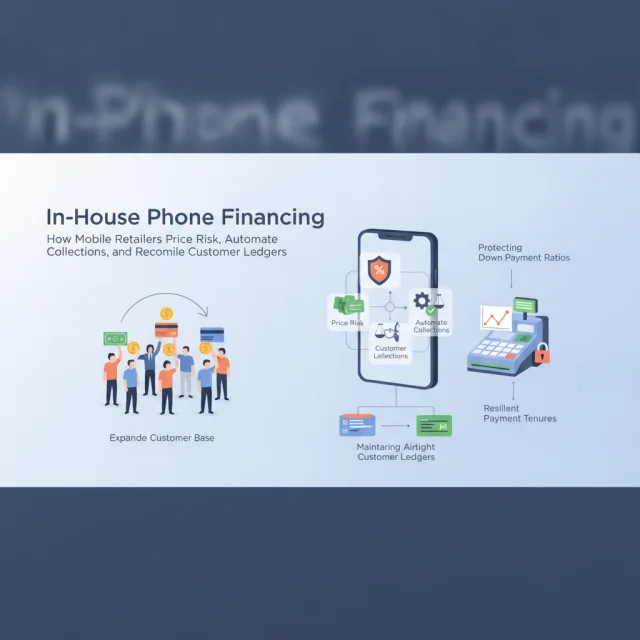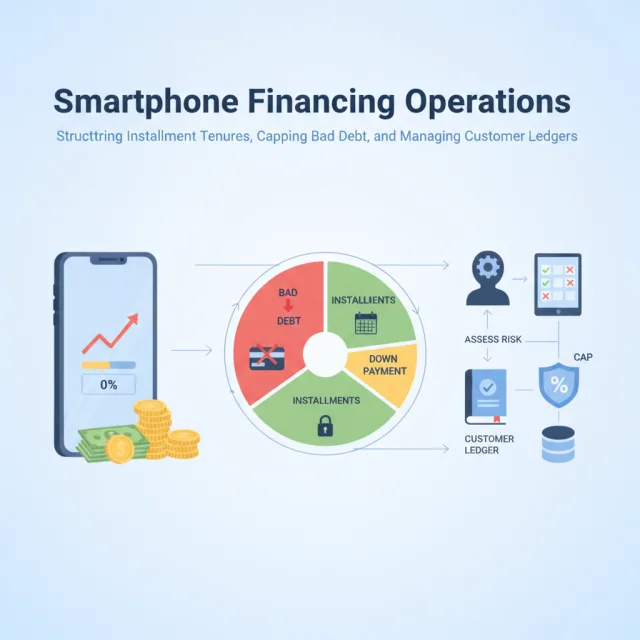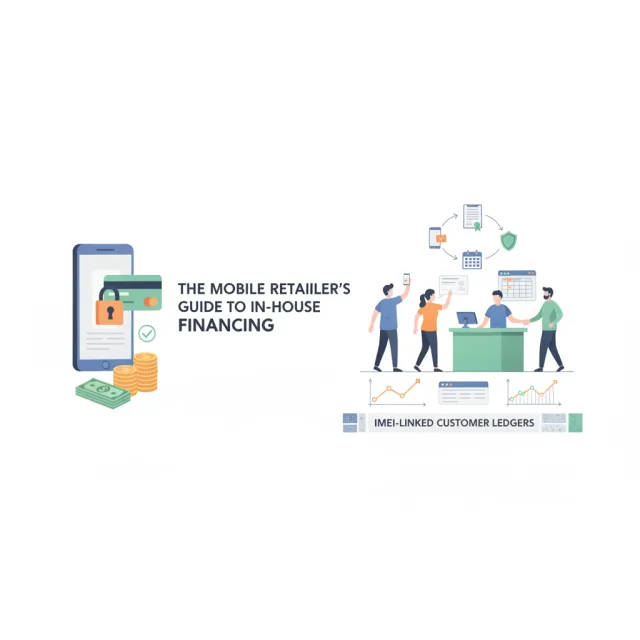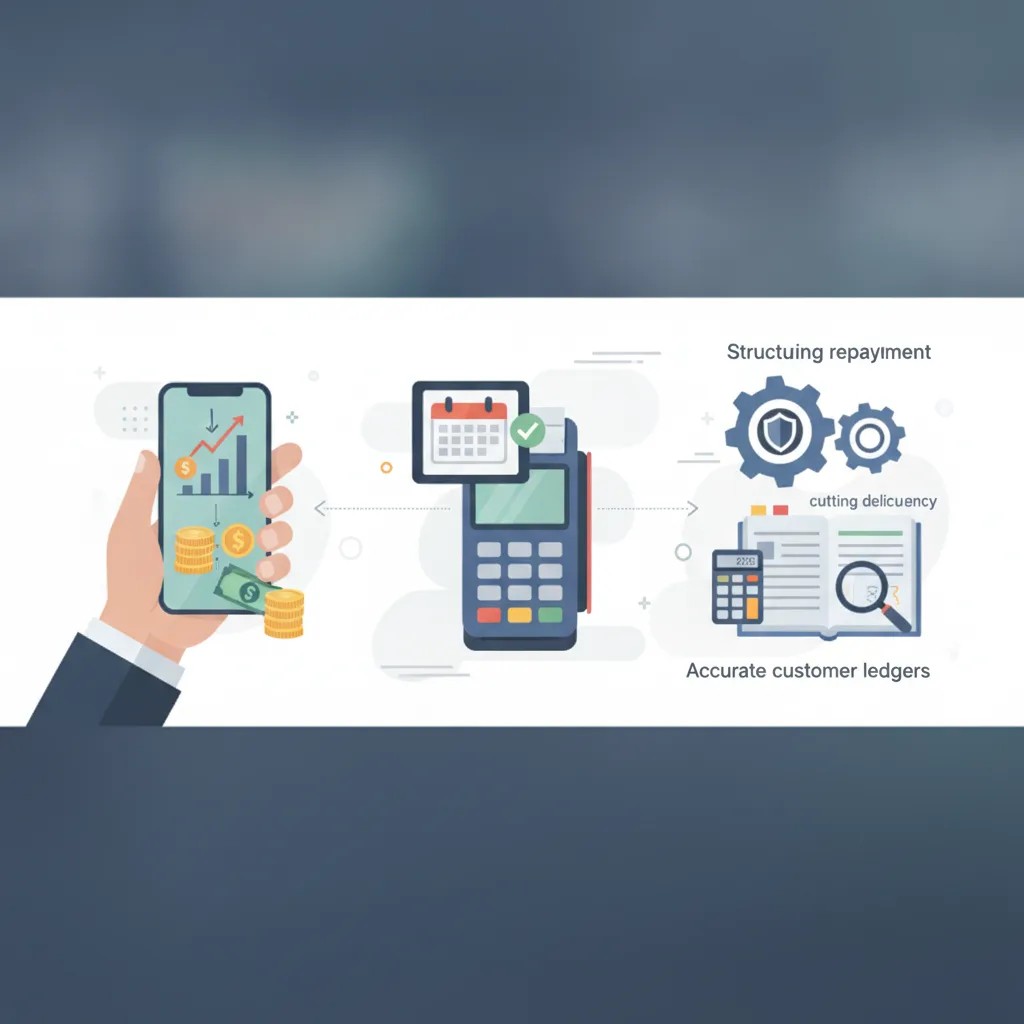
As retail hardware prices climb—driven in part by compounding component costs and memory supply pressures across the global smartphone market—shoppers are finding flagship and upper-mid-tier devices increasingly difficult to purchase outright. Offering point-of-sale installment plans or short-term store credit has become one of the most reliable ways for independent mobile shops and multi-store chains to protect sales velocity and close high-ticket transactions. Yet selling devices on credit fundamentally changes your business model: you are no longer just a merchant selling hardware; you are also acting as a balance-sheet lender.
When customer financing lacks strict underwriting rules and disciplined accounting, receivables quickly turn into bad debt. A customer walking out of your shop with an expensive smartphone on a loose verbal promise or an unmonitored handwritten ledger directly consumes the liquid cash you need to replenish inventory from distributors. To make installment sales profitable, retailers must engineer a bulletproof framework around down payments, repayment schedules, default prevention, and ledger reconciliation.
Down Payment Architecture: Insulating Your Wholesale Cost Basis
The most common failure in store-level financing is setting the initial barrier to entry too low. While "zero down" promotions generate foot traffic, they attract disproportionate credit risk. For an independent phone shop funding devices from its own working capital, an aggressive zero-down model is financially dangerous.
Your primary goal at the point of sale is to eliminate negative cash-flow exposure on the physical device. If a customer defaults after a single payment, your down payment should ideally absorb the wholesale acquisition cost of the handset, leaving only your gross margin at risk.
- The Cost-Recovery Benchmark (30% to 40% Down): Requiring a 30% to 40% upfront deposit on new smartphones ensures that the customer has tangible equity in the device while dramatically shrinking your store's exposure. Retail credit analyses show that securing an upfront down payment of 25% to 35% reduces subsequent default rates by roughly 40%, as customers with immediate personal equity are far less likely to abandon payment schedules.
- Tiering by Device Depreciation: Fast-depreciating devices (such as budget Android models) lose value rapidly on the secondary market. Require higher upfront deposits (at least 40% to 50%) on lower-tier hardware, while maintaining 30% to 35% down payment floors on high-liquidity flagship models that hold secondary resale value.
- Bundling Margin Protection: Avoid financing accessories like cases, fast chargers, or screen protectors. Require high-margin add-ons to be paid fully upfront alongside the device deposit. This injects immediate gross profit into the register and leaves only the primary handset value on the installment ledger.
Structuring Repayment Schedules: Tenures and Payment Cadence
Financing electronics differs fundamentally from financing automobiles or real estate. Smartphones are portable, susceptible to accidental damage, and undergo rapid annual depreciation. Long installment terms heavily skew risk against the retailer.
1. Keep Tenures Between 60 and 180 Days
Independent mobile retailers should resist offering 12- to 24-month payment terms unless partnering with an external financial institution that assumes the credit risk. For in-house financing, an ideal repayment window spans between 8 and 16 weeks (or 3 to 6 months). Shorter repayment windows match consumer enthusiasm for a newly unboxed phone and ensure the device is completely paid off well before the next product generation arrives or hardware wear-and-tear sets in.
2. Align Payment Cadences with Customer Income Streams
Monthly payment dates often fail because a 30-day window provides too much leeway for household cash flow to divert elsewhere. Structuring repayments on a bi-weekly or semi-monthly cadence—tied directly to local payroll or wage disbursement dates—yields significantly higher on-time collection rates. Breaking a $600 balance into six bi-weekly installments of $100 feels far more manageable to a buyer than two massive $300 monthly payments, reducing late-payment friction.
3. Transparency Over Complex Fees
Keep your fee structure straightforward. Whether you charge a fixed administrative setup fee or a clear, flat installment markup spread across the payment terms, ensure the total cost of ownership is explicitly stated on the credit invoice. Ambiguous interest calculations confuse buyers, breed distrust, and serve as an excuse for customers to delay settlement.
Mitigating Defaults and Controlling POS Credit Risk
When delinquency rates in consumer device financing creep upward—often reaching 2.7% to 2.9% across emerging and mature retail environments alike—retailers must enforce strict intake protocols before handing over boxed devices.
Mitigating non-payment begins with three non-negotiable store policies:
- Mandatory Identification and Contact Verification: Never extend credit without capturing a verified government ID, proof of address (utility bill or tenancy agreement), and at least two functional alternate contact numbers. Verify the phone numbers while the customer is standing at the counter before completing the transaction.
- Dual-IMEI Ledger Binding: With nearly all modern smartphones featuring Dual-SIM capabilities (physical dual nano-SIM or nano-SIM plus eSIM), record both IMEI 1 and IMEI 2 on the credit contract and in your retail management system. If a customer attempts to bypass an installment agreement or file a fraudulent loss report, having both serial identifiers documented protects your legal standing and ownership records.
- Automated Payment Reminders: Most early-stage defaults do not stem from intentional fraud, but from simple disorganization. Trigger polite, automated payment notifications three days before an installment is due, on the morning of the due date, and 24 hours after a missed deadline. Digital reminders dramatically curb casual delinquency before it hardens into bad debt.
Proactive collection SOP: When a payment is three days overdue, suspend the customer's eligibility for future store promotions or trade-ins. If non-payment reaches seven days, initiate direct phone outreach from the branch manager. At fourteen days past due without communication, issue a formal demand notice citing the registered IMEIs.
Customer Ledger Best Practices: Running Clean Receivables
Managing credit sales across hundreds of customers across one or multiple branches quickly collapses if your store relies on physical notebooks, disconnected spreadsheets, or generic accounting tools that lack IMEI context. A mobile shop's customer ledger must tie financial balances directly to physical hardware serial numbers.
The Core Rules of Mobile Retail Ledgers
- One Master Ledger per Customer: Every credit buyer must have a singular, consolidated ledger profile. If a customer finances a phone and later brings in a tablet for repair, both transactions must link to the same contact entity to prevent disjointed balances.
- Granular Payment Splitting at POS: In-store collections are rarely uniform. Customers often walk in wanting to pay a portion of an installment in cash and the remainder via mobile transfer or debit card. Your point of sale must natively handle split payments, immediately applying the aggregate credit against the customer's outstanding installment balance while keeping cash drawers balanced.
- Strict Principal vs. Penalty Attribution: If your store applies modest late fees, your ledger system must systematically allocate incoming payments to clear overdue principal before applying service charges. Conflating penalties with hardware costs muddles tax accounting and wholesale cost tracking.
Checklist: Weekly Credit Ledger Audit SOP
- [ ] Reconcile total register payment receipts against ledger credit updates for all active customer accounts.
- [ ] Generate an Accounts Receivable (AR) Aging Report segmented into current, 1–15 days overdue, 16–30 days overdue, and 30+ days delinquent.
- [ ] Audit active customer files to confirm that IMEI 1 and IMEI 2 are logged for every financed device currently carrying an open balance.
- [ ] Flag any accounts showing partial installment payments and verify that scheduled future balances reflect the correct remainder.
- [ ] Review branch-level collection velocity to detect any store location experiencing abnormal default spikes or undocumented discount overrides.
Streamlining Installment Operations with iFoxPro
Executing an in-house installment strategy without operational chaos requires point-of-sale software engineered around serialized mobile inventory. iFoxPro provides cloud-based management software built specifically for mobile phone shops, featuring a dedicated customer ledger and installments module that helps single-store operators and multi-branch retail chains manage credit sales safely.
When financing a device through iFoxPro, staff can record credit sales, define structured repayment schedules, and set automated reminders directly from the POS interface. Every transaction links directly to the smartphone's unique IMEI 1 and IMEI 2, ensuring an unbroken device history from intake to final payment settlement. At the counter, staff can process split payments across cash, card, or digital transfers, with the system updating customer ledgers in real time.
For store owners overseeing multi-location operations, iFoxPro's owner mobile app for Android and iOS delivers a live business dashboard with smart alerts for suspicious activity and one-tap approvals for branch transfers and discounts. Backed by role-based permissions and complete audit trails, shop owners can scale their customer financing programs while maintaining full visibility over outstanding receivables across every store.
Disciplined Credit Creates Repeat Retail Customers
Selling smartphones on credit is one of the most effective levers for driving volume, unlocking larger margin opportunities, and serving customers who cannot purchase premium hardware out of pocket. However, sustainable profitability is never determined by how many devices leave the showroom floor—it is determined by your ability to collect outstanding balances on schedule.
By enforcing disciplined down payments that cover your wholesale baseline, structuring realistic short-term repayment cadences, and maintaining rigorous, serial-linked customer ledgers, your mobile store can operate a high-performing financing service that drives consistent cash flow while minimizing bad debt.