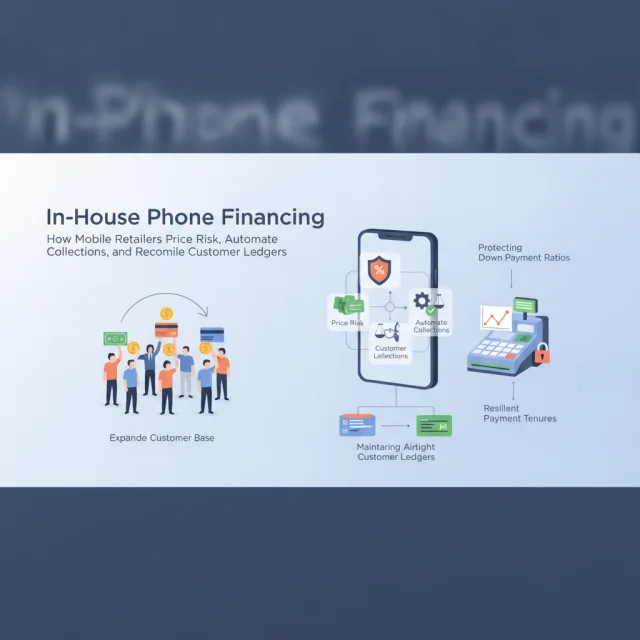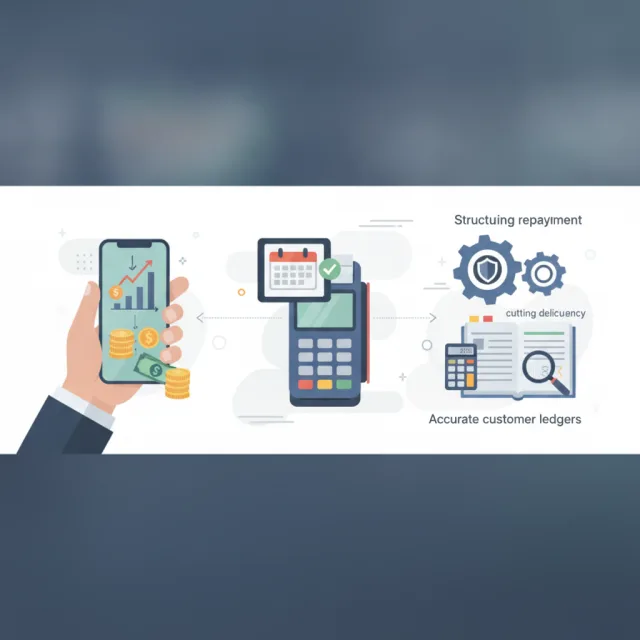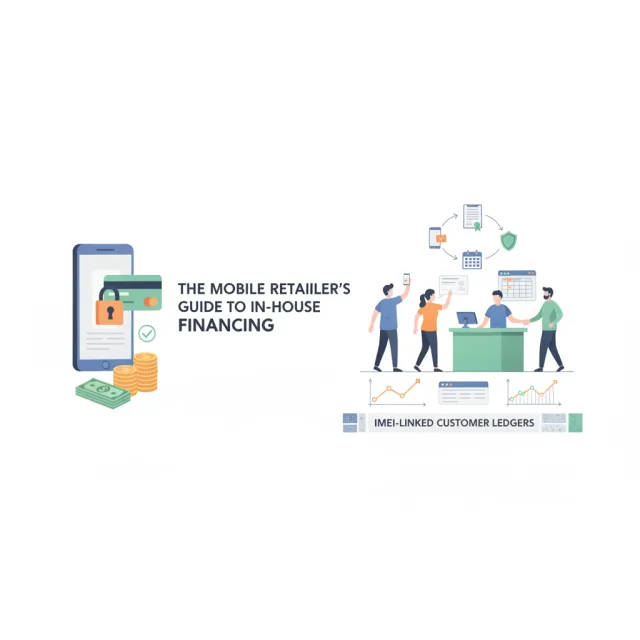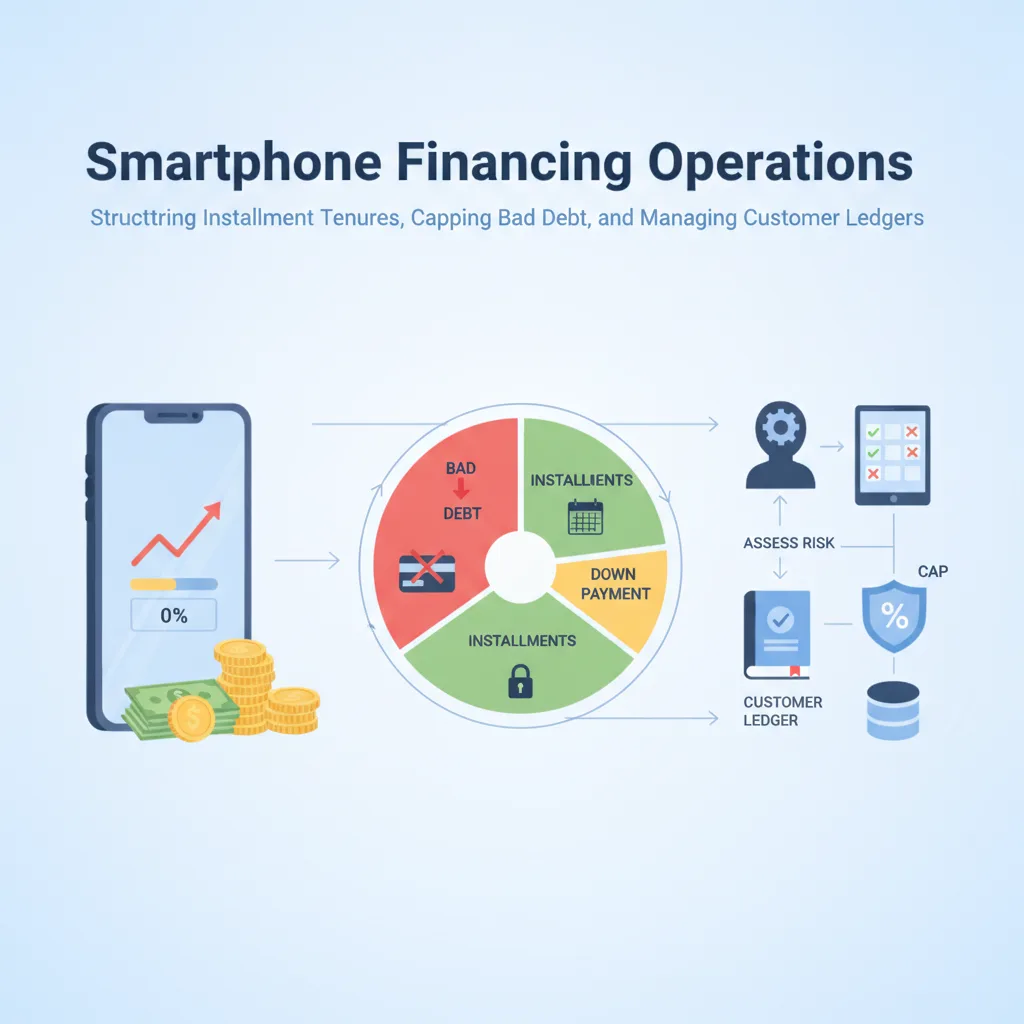
As global smartphone average selling prices (ASPs) surge toward historic highs—with IDC forecasting global ASPs to reach $581 in 2026 amid elevated memory costs—fewer walk-in shoppers can afford flagships or mid-tier devices outright in cash. To keep floor traffic converting, independent mobile phone shops worldwide increasingly rely on credit and installment sales. In competitive retail channels, average smartphone financing tenures have expanded to roughly 10 months.
Yet offering hardware on credit carries severe asymmetric risk. When a customer walks out of your store with a sealed box, your cost of goods sold (COGS) is fully spent, but your revenue remains theoretical. Without strict repayment schedules, clear underwriting checks, and synchronized ledger tracking, an installment program ceases to be a sales engine and becomes a fast track to bad debt. Here is how high-performing phone retailers structure credit plans, prevent delinquency, and audit customer balances with mathematical precision.
1. Structuring Installment Schedules to Protect Working Capital
The primary error in retail device financing is designing installment terms around customer wishes rather than inventory economics. Smartphones depreciate continuously; if a customer defaults six months into a twelve-month plan, repossessing a used, scratched device rarely covers the outstanding balance.
The 35–40% Upfront Baseline
Never allow a high-ticket device to leave the counter with zero money down. A sound rule of thumb for independent retailers is an upfront payment equal to at least 35% to 40% of the retail price. In most margin structures, this deposit covers your wholesale acquisition cost (landed cost) or the vast majority of it. If the customer defaults on subsequent payments, your store has recovered its capital out-of-pocket, meaning the unpaid balance represents unrealized gross profit rather than raw inventory loss.
Matching Tenure to Device Depreciation
Device financing terms must reflect secondary market value decay:
- Short-cycle plans (3 to 6 months): Ideal for used or certified pre-owned (CPO) phones. These devices carry thinner margins and depreciate rapidly if returned.
- Medium-cycle plans (6 to 10 months): Standard for brand-new mid-range and premium flagships. The structured payments must stay ahead of the device's market resale value throughout the duration of the plan.
- Payment cadence: Align installments with the customer’s income stream. Semi-monthly (bi-weekly) micro-installments often exhibit significantly lower default rates than large monthly lump sums, particularly for hourly or gig-economy wage earners.
Transparent Fee Modeling
Whether you charge a flat administrative markup or calculate explicit installment interest, ensure the total repayment obligation is documented clearly at checkout. Hidden penalties erode customer trust, while ambiguous contracts make disputed balances uncollectible in small-claims court or commercial arbitration.
2. Front-Line Risk Mitigation and Customer Verification
Unlike financial institutions, phone shop owners do not always have access to centralized credit bureaus. Mitigating credit defaults therefore requires structured retail-level underwriting.
Tiered Credit Limits
Do not finance top-tier flagships for unknown walk-ins on their first visit. Build a graduation system where first-time credit customers are capped at lower-value devices or shorter tenures. Once an individual completes an initial 3-month or 6-month schedule without missed payments, unlock higher spending limits for future hardware upgrades or accessories.
Multi-Point Verification SOP
Before generating a credit invoice, front-desk staff must complete a mandatory verification checklist:
- Government identification: Physically inspect and record an official national ID, passport, or driver’s license. Verify that photo features match the buyer standing at the counter.
- Proof of residential stability: Collect a recent utility invoice or lease agreement confirming a local address.
- Secondary contacts: Require at least one verified family or workplace contact number, and confirm the line connects while the customer is still in the store.
- Hardware tethering: Record both IMEI 1 and IMEI 2 on the financing contract alongside the customer’s file. Linking the exact device serial to the account ensures clear legal ownership trail until the final receipt clears.
3. Customer Ledger Best Practices: Ditching the Spreadsheet
A credit sale is only as reliable as the ledger tracking it. Running installments across paper notebooks, sticky notes, or ad-hoc spreadsheets creates catastrophic blind spots. When sales staff forget to log a cash partial payment or fail to notice a 15-day overdue balance, shop liquidity evaporates.
Real-Time Account Aging Buckets
Installment ledgers must classify outstanding balances into dynamic aging buckets:
- Current (Within grace period): Payment due in 1–7 days.
- Delinquent Tier 1 (1–15 days past due): Friendly, automated SMS or WhatsApp notifications sent directly to the customer.
- Delinquent Tier 2 (16–30 days past due): Direct phone outreach from the store manager; account flagged across all branch POS terminals to prevent new sales or trade-ins.
- Default / Collection (30+ days past due): Formal legal demand, repossession protocol, or write-off review.
Split-Payment and Partial Settlement Rules
Customers paying down installments frequently use mixed tender—such as paying part of an installment in cash and the remainder via mobile wallet or card. Your ledger must seamlessly support multi-tender split payments without disconnecting the audit trail from the specific transaction invoice.
Accounting Tip: Every installment payment must automatically update three records simultaneously: the customer’s open balance, the daily cash/bank drawer ledger, and the total branch accounts receivable report. Disconnected logs invite internal employee leakage.
4. The In-Store Installment Workflow SOP
To eliminate operational ambiguity, enforce this standardized procedure for every credit transaction across your sales team:
- Intake and Identity Verification: Staff scans customer ID, captures phone numbers, and verifies residential documentation.
- Device Selection and IMEI Allocation: Device is scanned into the transaction by barcode scanner, logging IMEI 1 and IMEI 2 into the customer agreement.
- Down Payment Execution: Front-desk registers the upfront deposit (minimum 35%) via POS, issuing a formal receipt reflecting the remaining financed principal.
- Schedule Generation: The system computes installment dates, exact amounts due, and grace periods, printing a copy for customer signature.
- Automated Reminder Setup: Repayment alert schedules are configured to notify the customer three days before each due date.
- Payment Posting and Balance Reconciliation: When payments arrive, the POS attributes cash or digital tenders directly against the specific invoice schedule, issuing an updated remaining-balance statement.
- Account Clearance: Upon final installment clearing, the customer ledger flags the account as completed, releasing all holds and upgrading the buyer's internal credit tier.
Streamlining Installments and Device Tracking with iFoxPro
Managing credit sales manually across multiple branches often leads to reconciliation errors and uncollected debts. Purpose-built mobile retail platforms eliminate these operational hurdles.
With iFoxPro, cloud management software built specifically for mobile phone shops, credit management is embedded directly into everyday store workflows. Its customer ledger and installments module enables retailers to set up customized repayment schedules, monitor open credit balances, and trigger automated reminders before due dates hit. Because iFoxPro tracks phones by IMEI 1 and IMEI 2 from intake to checkout, financed hardware is tied to the customer’s ledger profile.
At the checkout counter, iFoxPro’s fast POS supports thermal or A4 receipts and multi-tender split payments, ensuring partial installment collections are posted accurately to the debtor ledger and cash drawer without manual spreadsheet work. Multi-branch operators and owners can track delinquent accounts, monitor aging receivables, and review cash flows in real time using the iFoxPro mobile app for Android and iOS. For retailers looking to scale safe credit operations across single or multiple locations, iFoxPro provides a 14-day free trial with no credit card required, backed by free setup and data migration assistance.
Conclusion
Offering smartphone financing allows independent retailers to compete against carrier subsidies and big-box electronics chains. But long-term profitability hinges on running credit sales like an underwriter, not a casual lender. By requiring disciplined down payments, enforcing rigorous customer intake checks, and maintaining real-time, IMEI-linked customer ledgers, your store can scale hardware turnover while keeping bad debt firmly under control.