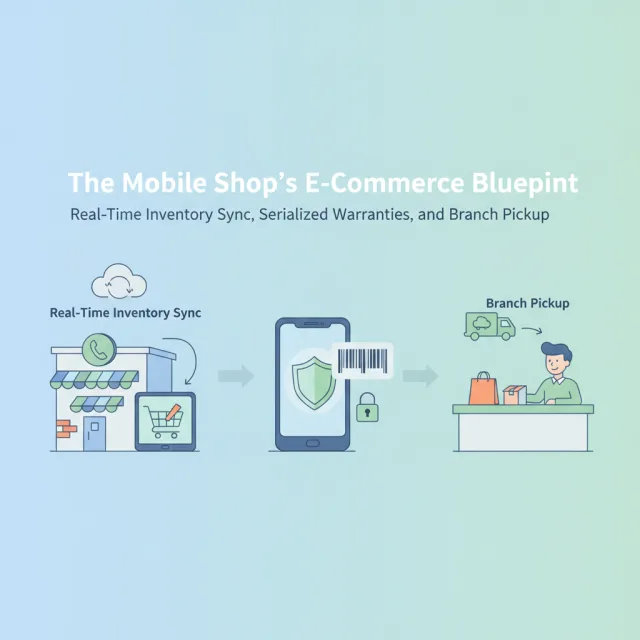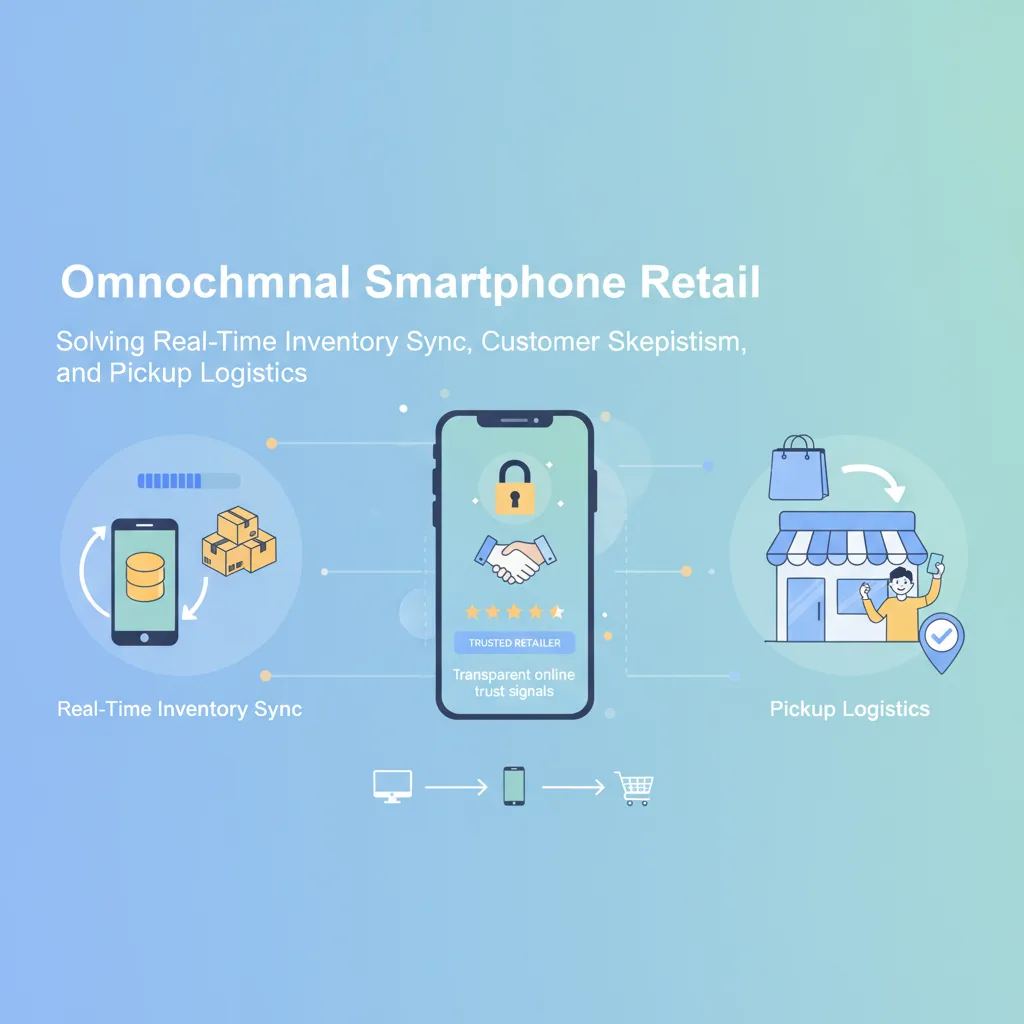
Selling mobile devices online is fundamentally different from selling apparel, books, or packaged consumer goods. When a customer browses a smartphone on the internet, they are not just evaluating a price tag; they are evaluating risk. High-ticket price points, pervasive counterfeit concerns, and carrier lock uncertainties make consumers naturally cautious when buying electronics from independent retailers on the web. Meanwhile, for the shop owner, an unlinked online cart introduces operational hazards: selling an iPhone online that a walk-in retail customer purchased five minutes earlier at the counter creates an instant customer service crisis.
Yet ignoring digital sales leaves money on the table. Global retail research indicates that over two-thirds of modern consumers have embraced click-and-collect fulfillment, relying on digital storefronts to research local stock before transacting. For mobile phone retailers, succeeding online does not mean trying to become an anonymous global marketplace. It means creating a unified, trustworthy omnichannel operation where physical inventory, serialized warranty records, and flexible fulfillment work in absolute harmony.
Overcoming the Trust Deficit in Online Phone Sales
Consumer hesitation is the number one barrier to converting web traffic into phone sales. While shoppers readily order a phone case or charging cable from an unfamiliar website, purchasing an expensive handset triggers immediate defensive questions: Is this device genuine? Has it been blacklisted? What happens if the screen exhibits dead pixels in two weeks?
To convert online visitors, independent mobile retailers must proactively dismantle these doubts directly on their product pages:
- Standardize Condition Grading: If selling open-box, pre-owned, or refurbished devices, subjective terms like "good condition" invite disputes. Publish rigid, transparent cosmetic tiers (e.g., Pristine/Grade A, Light Wear/Grade B) and define clear battery health thresholds.
- Display Authenticity and Origin Transparency: Clarify whether the device is factory unlocked, regional or international spec, and dual-SIM compatible. Specifying exact chipset or network compatibility eliminates return requests caused by customer misunderstanding.
- Front-and-Center Physical Store Credentials: Pure-play drop-shippers often hide behind digital contact forms. Independent retailers should highlight their physical branch addresses, working hours, and landline contact numbers directly in the website header and footer. A tangible physical presence instantly validates legitimacy.
- Documented Warranty Commitments: Explicitly state warranty coverage on the product page. Detail whether coverage spans hardware defects, battery degradation, or screen components, and outline the exact claim process rather than burying terms in a generic legal page.
The Serialization Trap: Why Generic E-Commerce Stock Sync Fails
Traditional e-commerce platforms handle inventory by simple quantity integers: a store receives ten identical blue t-shirts, sets the quantity to ten, and decreases the number as units sell. In mobile retail, this model breaks down completely because phones are individual, serialized assets.
Every smartphone possesses unique identifier data (IMEI 1 and IMEI 2 for dual-SIM devices), specific battery degradation states, unique cosmetic wear, and individual supplier costs. When a store runs a disconnected digital cart alongside a busy physical retail counter, three major failures occur:
1. Ghost-Stock Overselling
If an employee sells your last in-stock Samsung Galaxy at Branch A at 2:15 PM, and an online shopper purchases that same SKU online at 2:20 PM because inventory is updated manually at the end of the day, you have a ghost sale. Canceling the order destroys customer goodwill and damages payment processor reliability scores.
2. The Warranty Assignment Bottleneck
In standard e-commerce, the order confirmation contains a transaction number and a SKU. When that customer experiences a hardware issue six months later, staff have no record connecting that customer's invoice to the specific IMEI unit that shipped. Without an unbroken serialized paper trail, retailers risk honoring warranties on phones they never actually sold.
3. Margin Leakage from Disconnected Pricing
Retail trade-in values and handset wholesale costs fluctuate quickly. If your physical store adjusts promotional pricing or marks down a specific unit due to minor box blemishes, an unlinked web storefront will either leave money on the table or show discrepancies that frustrate walk-in shoppers who check your site on their phone while standing at the counter.
The solution is bidirectional, real-time POS synchronization. The moment an IMEI barcode is scanned through the retail counter scanner, the web catalog must automatically remove that specific unit or adjust the live SKU count across the board.
Fulfillment Dynamics: Branch Pickup vs. Courier Delivery
Managing order fulfillment for electronics demands a careful calculation of logistics cost, transit risk, and customer preference. High-value mobile devices are frequent targets of package theft and transit damage, making your fulfillment strategy critical to margin survival.
Why Branch Pickup (BOPIS) Is the Retailer's Secret Advantage
Buy Online, Pick Up In Store (also known as click-and-collect) gives brick-and-mortar phone shops a massive competitive edge over pure-play online discounters. Market forecasts indicate that global BOPIS transactions will surpass €227 billion by 2033, driven largely by shoppers who want immediacy without delivery fees.
For mobile shops, in-store pickup offers three concrete benefits:
- Zero Delivery Transit Risk: Eliminates carrier loss claims, damaged packaging disputes, and courier porch-theft chargebacks.
- On-the-Spot Verification: The customer inspects the handset, confirms cosmetic condition, and tests the device before walking out, drastically curtailing post-sale "not as described" return disputes.
- High-Margin Accessory Attach Opportunities: When customers collect their device, staff can immediately offer tempered glass installation, protective cases, charging bricks, and trade-in assessments—accessories that carry retail margins often exceeding 50% to 70%.
Protecting Margins on Courier Deliveries
When offering home or office delivery, you must treat the parcel like the high-value asset it is. Never ship unverified high-risk orders. Require customer identity verification on high-value card payments, use direct adult signature requirements, and log the dispatching IMEI on both the printed packing slip and the customer's digital dispatch notification. In markets where cash-on-delivery (COD) or direct bank transfers are common, establish strict phone verification before releasing the device to local logistics dispatchers.
Self-Service Customer Portals: Tracking Orders, Warranties, and Repairs
Post-purchase anxiety is high in consumer electronics. If a customer has to phone your shop floor repeatedly to ask if their payment cleared, where their package is, or whether their warranty is still valid, your administrative overhead spikes.
Modern mobile commerce requires dedicated self-service customer accounts that consolidate three key touchpoints:
- Real-Time Order Progression: Clear milestone visibility (Order Received → Payment Confirmed → Allocated/Packed → In Transit or Ready for Counter Collection).
- Serialized Warranty Status: Customers should be able to log in or enter their device's IMEI to check remaining warranty days, covered components, and previous service history. This level of transparency cements long-term brand credibility.
- Integrated Repair Ticket Tracking: If your store also operates a repair service department, your digital portal should allow customers to check the status of active device repairs alongside their purchase orders, viewing notes such as parts awaiting arrival, testing completed, or device ready for pickup.
Checklist: Connecting Your Storefront for Omnichannel Selling
Before launching or restructuring your mobile shop's digital sales presence, ensure your operational workflow meets this checklist:
- Single Source of Truth: Inventory levels adjust automatically in real time whenever an item sells in-store or online, preventing double sales.
- IMEI-Linked Order Data: Every outbound online order ties directly to the exact IMEI 1 / IMEI 2 numbers dispatched, visible on invoices and customer history records.
- Configurable Branch Allocations: Multi-branch retailers can route pickup orders to the exact location carrying the requested device, or initiate an internal stock transfer before notifying the customer.
- Diverse Payment Capabilities: Support digital payment gateways, upfront bank wire confirmations, and local pickup settlements seamlessly.
- Automated Notification Triggers: Instant automated SMS or email receipts containing order specifics, pickup instructions, or courier tracking credentials.
- Mobile-Optimized Architecture: Over 70% of local retail browsing occurs on smartphones; catalog browsing, specifications filtering, and checkout must be responsive and fast.
Unifying In-Store and Online Operations with iFoxPro
Executing this level of synchronization between a retail counter and a web store is difficult when attempting to bolt disparate systems together. iFoxPro was built specifically to solve this disconnect for mobile phone retailers, service centers, and distributors.
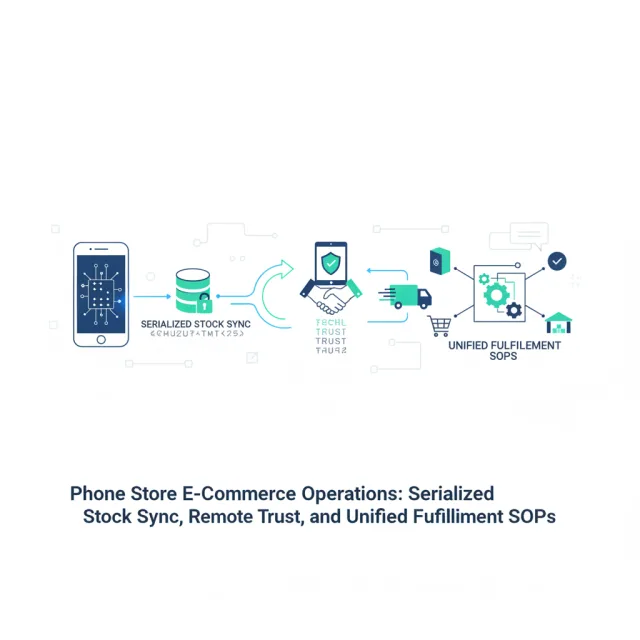
Rather than requiring third-party connectors, every iFoxPro plan includes a dedicated, ready-made e-commerce website hosted on the shop's own domain. Because the digital storefront is natively linked to iFoxPro's POS and inventory engine, stock synchronization is automatic and instantaneous. When an employee bills a phone in-store via barcode or IMEI camera scanning, the web catalog updates in real time, preventing overselling.
The platform natively supports full IMEI-based tracking (capturing both IMEI 1 and IMEI 2 across device history), allowing customers to manage their accounts online and track orders, active warranties, and repair status directly by IMEI. Whether customers choose secure online payment gateways, bank transfers, cash on delivery, or branch pickup, the sale, customer ledger, and serialized records remain unified under a single cloud system.
Conclusion
Succeeding in online mobile retail does not require competing on paper-thin margins against global mass-market platforms. By leveraging your physical retail presence, offering convenient in-store pickup, and ensuring transparent, serialized device tracking, independent phone retailers can provide a level of trust and responsiveness that pure e-commerce giants cannot duplicate. When your counter POS and web catalog operate as a single, real-time ecosystem, selling online stops being an operational liability and becomes your most predictable growth channel.