Modern consumers research hardware long before they step foot inside a store. With mobile devices accounting for roughly 60% of all global e-commerce retail transactions, mobile retailers can no longer afford to treat their physical counter and their digital presence as separate businesses. However, launching an online storefront for smartphones is fundamentally different from selling apparel or packaged goods. When the average basket value exceeds several hundred dollars and every device carries a unique legal identity, generic e-commerce templates fall apart.
When an online buyer places an order for a flagship smartphone, they want to know that the unit is genuinely in stock, that its warranty is valid, and that they will receive exactly what they paid for without shipping delays or counterfeit risks. For the retailer, a single mismatch between the in-store point of sale (POS) and the web cart can lead to double-selling, canceled orders, and lost merchant reputation. Bridging physical counters with an online storefront requires a serialized operational strategy designed specifically for telecom retail.
The Serialized Inventory Dilemma: Why Generic E-Commerce Fails
In standard retail, inventory management revolves around simple Stock Keeping Units (SKUs). If a clothing store has 10 blue medium t-shirts, any unit satisfies an online order. In contrast, smartphones are serialized high-value hardware. Every handset holds a distinct International Mobile Equipment Identity (IMEI)—often dual SIMs with IMEI 1 and IMEI 2—along with distinct purchase costs, supplier batches, condition gradings (for refurbished units), and warranty start dates.
When independent retailers attempt to connect a generic shopping cart plug-in to a traditional physical ledger, three operational breakdowns immediately emerge:
- Double-Selling Ghost Inventory: A customer buys the last sealed 256GB device at the physical counter at 2:15 PM. At 2:18 PM, a remote customer completes checkout for the exact same unit online because the web platform syncs on an hourly schedule.
- Unassigned Serial Dispatches: An order is marked "shipped" in the e-commerce dashboard, but the physical warehouse or store clerk grabs an arbitrary box off the shelf without linking that specific IMEI to the customer profile. If that handset is later returned or submitted for warranty service, the retailer cannot verify whether the returned device matches what was actually sold.
- Accessory Stock Discrepancies: High-turnover accessories like fast chargers, tempered glass, and MagSafe cases sell rapidly at the counter during peak evening rush. Without barcode-driven synchronization, the digital storefront shows stock that walked out the front door hours ago.
Real-Time Inventory Synchronization: Architectural Best Practices
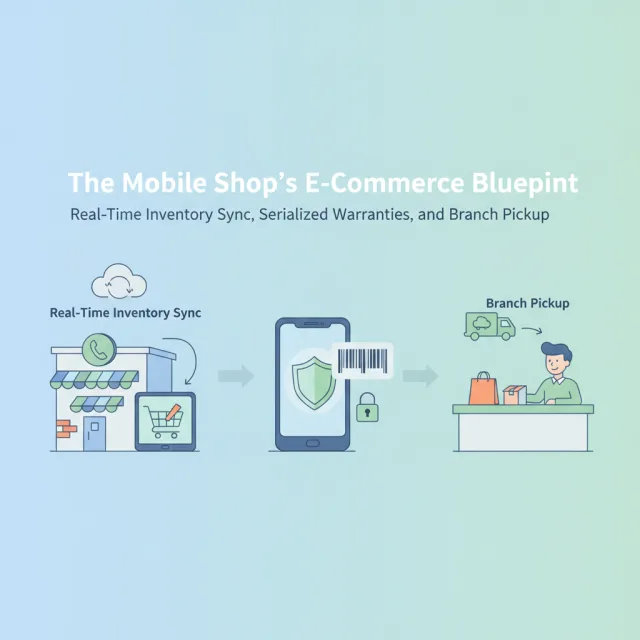
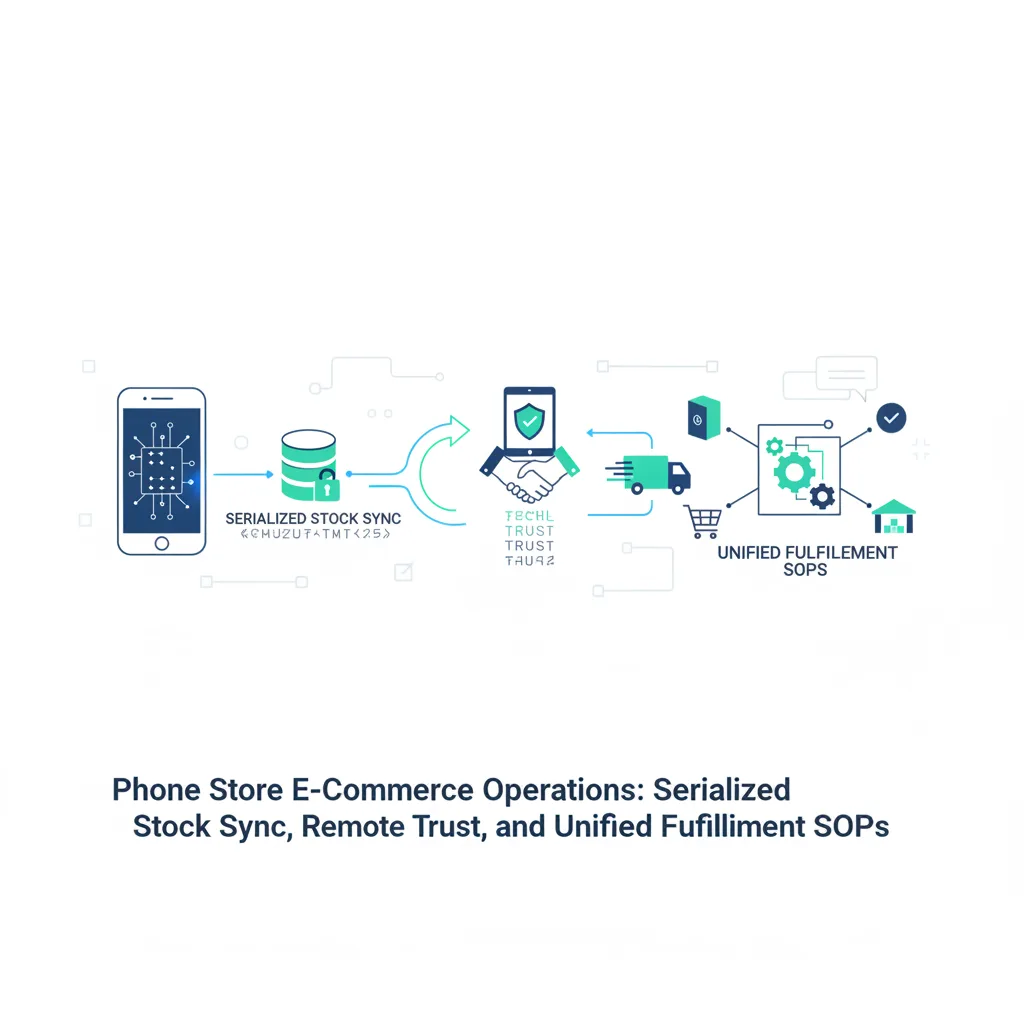
To eliminate ghost inventory, phone shops need a unified system where the POS register and the digital storefront share a single real-time data layer. The moment a barcode or IMEI is scanned at the physical checkout counter, that individual serial number must immediately decrement from web availability.
Managing serialized stock across multiple channels requires three distinct safeguards:
1. Virtual Buffer Thresholds for Fast-Moving SKUs
For high-demand accessory SKUs or heavily discounted handsets, network latency can occasionally lead to simultaneous checkout attempts. Sophisticated retailers implement safety buffers. If inventory of a specific phone model hits one unit across the branch network, the e-commerce engine can automatically switch that SKU to "Call to Reserve" or "In-Store Exclusive" to guarantee that a walk-in buyer and a digital checkout do not collide.
2. Pre-Allocation on Checkout
When an online customer initiates a transaction and enters an active payment gateway session, that inventory slot should be temporarily held for 10 to 15 minutes. If the bank transfer or card payment clears, the serial is formally allocated to the order ID. If the checkout session expires or fails, the unit releases back into the pool without clerk intervention.
3. Multi-Branch Routing Logic
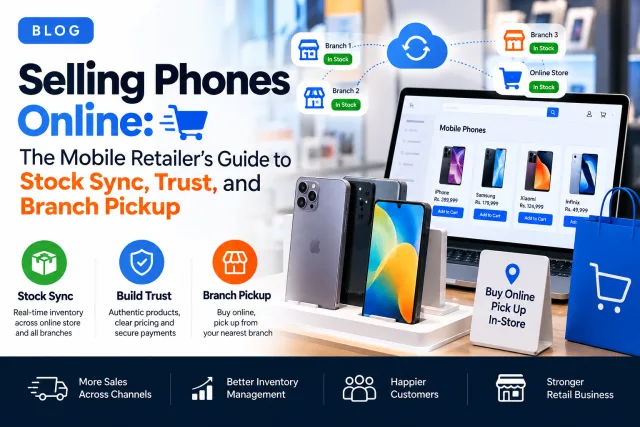
For retailers operating more than one location, the e-commerce platform should display location-based inventory. If Branch A has three units of a device and Branch B has none, an online shopper choosing Click & Collect must see immediate availability for Branch A, while Branch B displays a transfer lead time (e.g., "Available for pickup in 24 hours").
Overcoming the Trust Deficit in Remote Device Sales
High-ticket consumer electronics suffer from elevated cart abandonment rates because buyers are naturally suspicious of online phone listings. Counterfeit devices, grey-market imports lacking regional carrier support, and disguised refurbished units have made consumers hesitant to transfer funds to independent websites.
To build conversion-grade trust, your digital storefront must provide verified operational transparency:
Transparent Hardware & Battery Grading
If you sell pre-owned, open-box, or certified refurbished devices, never use vague descriptions like "Like New." Provide standardized grading definitions (e.g., Grade A+: 100% functional, zero cosmetic blemishes, minimum 85% battery health). Displaying the specific battery diagnostic results and exterior macro-photographs directly on the product listing cuts return rates dramatically.
Public-Facing Warranty Validation
Skeptical buyers fear that independent shops will disappear when a screen panel flickers three months later. Provide a self-service warranty lookup portal where customers can input an IMEI or order number to see the exact remaining coverage period, covered repair categories (e.g., motherboard, logic board, display), and claim instructions.
Physical Footprint Anchors
Pure-play drop-shippers cannot offer local security. Emphasize your physical storefronts prominently on your homepage, product pages, and checkout screen. Showcase your physical street addresses, business licensing details, high-resolution photographs of your service counters, and clear options for direct face-to-face assistance.
Fulfillment Logistics: Branch Pickup (BOPIS) vs. Direct Delivery
Offering both local collection and nationwide courier dispatch is essential. According to retail industry research from Capital One Shopping, nearly 59% of consumers expect retailers to offer Buy Online, Pick Up In-Store (BOPIS) capabilities. In mobile retail, in-store pickup is often the preferred channel because it eliminates shipping fees, avoids porch theft, and provides immediate gratification.
However, each fulfillment method requires strict standard operating procedures (SOPs) to avoid fraud and shrinkage.
Fulfillment Rule of Thumb: Never ship or hand over a mobile phone without recording the exact device IMEI against both the customer’s invoice and the courier dispatch manifest.
Standard Operating Procedure: Click & Collect / Branch Pickup
- Order Staging: When an online order is flagged for branch pickup, staff physically pull the assigned device from the safe, affix a printed pickup label showing the customer name and order ID, and place it in a dedicated staging bin.
- Customer Identity Verification: When the buyer arrives, staff must inspect a government-issued photo ID that matches the order name. For paid online orders, the payment confirmation SMS or digital barcode token must be validated.
- Terminal IMEI Verification: Before handing the box over, the sales clerk scans the box's IMEI barcode into the POS system to close out the collection ticket. This action triggers the digital warranty clock and emails the final receipt.
- The Accessory Attachment Window: Pickup orders create an organic upselling opportunity. When handing over the device, staff should demonstrate compatible protective cases, lens protectors, and charging blocks, converting a simple pickup into an incremental sales interaction.
Standard Operating Procedure: Direct Courier Dispatch
- Serial Photo Documentation: Before sealing the parcel, take a quick snapshot of the box barcode showing the IMEI alongside the shipping manifest.
- Tamper-Evident Packaging: High-end smartphones are prime targets for package tampering. Use reinforced, branded tamper-evident tape that displays a visible void pattern if peeled.
- Mandatory Signature Delivery: Never ship an untracked or drop-at-door smartphone parcel. Require adult signature verification on delivery to insulate your business from chargeback claims and false "item not received" disputes.
- Automated Carrier Tracking: Push live tracking links directly to the customer’s account portal so they can monitor dispatch stages in real time without calling store staff.
The Post-Purchase Ecosystem: Unified Repair and Warranty Portals
An e-commerce purchase should not end when the package lands on the doorstep. The most profitable mobile retailers use their digital presence to drive recurring high-margin service revenue.
By giving customers a dedicated account portal, phone shops can enable self-service tracking across multiple touchpoints:
- IMEI-Based Warranty Tracking: Customers can log in at any time to verify how many days of store or manufacturer warranty remain on each device they have purchased.
- Live Repair Job Status: If a customer drops off or mails in a phone for a screen replacement, battery renewal, or board diagnostics, they should be able to view real-time stage updates (e.g., "Awaiting Parts," "Under Technician Bench Test," "Ready for Collection") using their job card ticket number or device IMEI.
- Invoice Archiving: Providing permanent PDF downloads of original tax-compliant invoices protects customers during insurance claims or travel declarations, reducing inbound support inquiries to your administrative team.
How iFoxPro Unifies Physical Stores and Online Retail
Attempting to glue together separate software tools—one for counter billing, another for repair tracking, and a third-party hosted platform for online sales—inevitably leads to broken webhooks, desynchronized inventory, and bookkeeping errors. iFoxPro was engineered specifically to solve this problem for mobile phone retailers.
Every iFoxPro plan includes a dedicated, ready-made e-commerce website deployed directly on your shop’s custom domain. Because the online storefront is natively integrated with the iFoxPro cloud core, inventory synchronization is fully automated: when an IMEI or barcoded accessory sells at your physical counter, it updates across the digital storefront instantly. Online customers can choose between local branch pickup or courier delivery, select payment methods including integrated online gateways, bank transfers, or cash on delivery (COD), and track their purchases.
Furthermore, iFoxPro provides your buyers with self-service customer accounts featuring integrated order, warranty, and repair tracking by IMEI. Backed by a secure 3-layer cloud architecture, TLS 1.3 encryption, and complete GDPR compliance, iFoxPro gives independent shops and multi-branch retail networks enterprise-grade omnichannel infrastructure right out of the box.
Building a Resilient Retail Front
Expanding your mobile shop into e-commerce is no longer about fighting global digital marketplaces on volume or pricing. Your competitive advantage lies in your physical presence, local accountability, and technical expertise. By locking down serialized inventory tracking, implementing transparent warranty systems, and standardizing branch pickup protocols, you transform your website into a reliable revenue driver that reinforces your stores rather than complicating them.