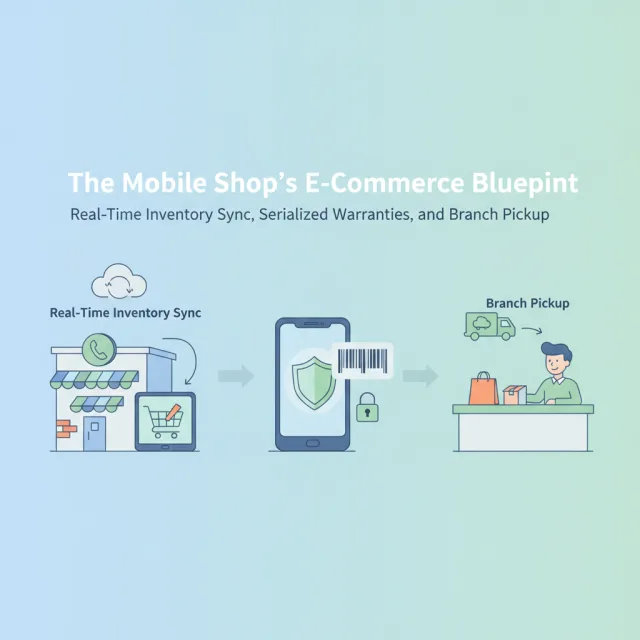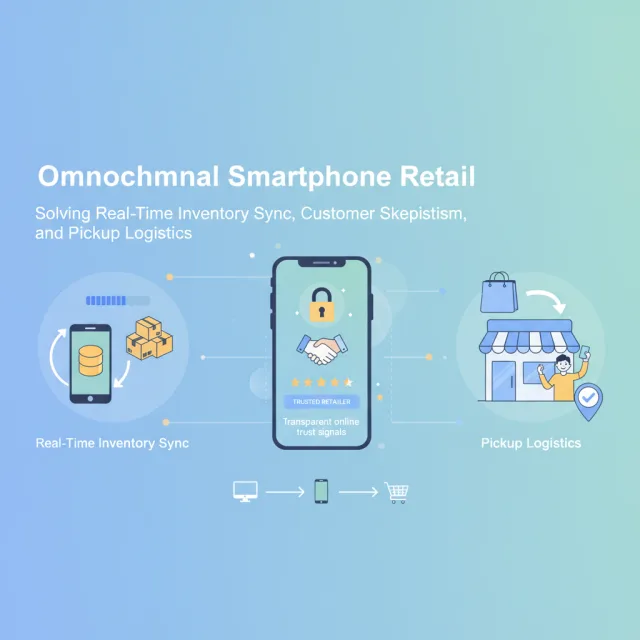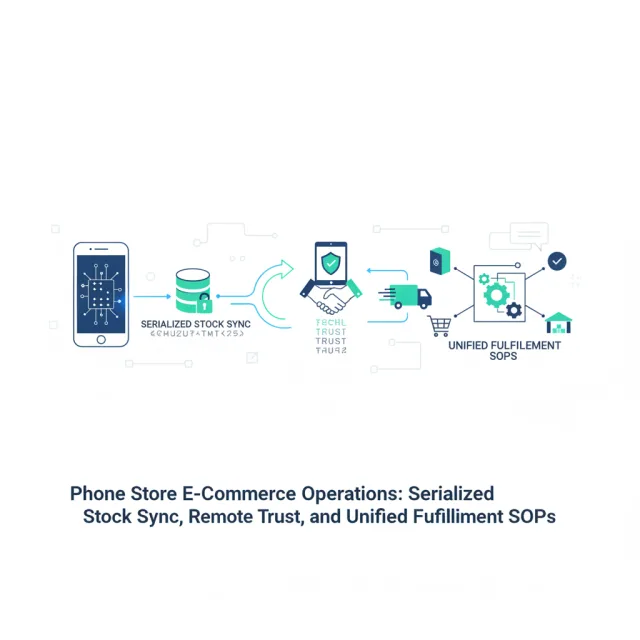
Selling a smartphone online is fundamentally different from selling apparel or home goods. When a shopper considers spending $500 to $1,200 on a high-end device from an independent retailer’s website, skepticism is their default reaction. Will the device arrive in the promised condition? Is the handset blacklisted, region-locked, or refurbished with sub-par replacement parts? Will the package be intercepted in transit?
For the mobile shop owner, the back-office stakes are just as high. Overselling a serialized device that walked out of a physical storefront five minutes earlier creates an operational headache and damages customer trust. With mobile commerce commanding over 60% of all global e-commerce transactions, independent retailers cannot afford to treat online sales as an afterthought. Successfully expanding into digital commerce demands a unified approach that blends serialized stock synchronization, transparent trust-building, and smart hybrid fulfillment.
Dismantling the Digital Trust Deficit in Phone Sales
Consumer anxiety surrounding online smartphone purchases stems from genuine market risks. Online marketplaces are plagued by stolen devices, counterfeit accessories, and masked cosmetic defects. To capture local and regional online demand, an independent phone retailer must position their digital storefront not as a faceless warehouse, but as a verified, accountable specialist.
Building that digital trust requires specific operational commitments across your product pages:
- Individual Device Transparency: If you sell pre-owned, certified refurbished, or open-box devices, generic manufacturer renders kill conversion rates. Display high-resolution images of the specific cosmetic grading tier, alongside clear disclosures regarding battery health percentage and functional testing benchmarks.
- Verifiable IMEI and Network Guarantees: State clearly in product descriptions that every device has passed rigorous intake audits, is guaranteed clean against global blacklists, and is factory unlocked or explicitly locked to a named carrier.
- Prominent Physical Footprint: Highlight your physical store addresses, opening hours, local customer service phone numbers, and direct messaging channels (such as WhatsApp) right on your header and product pages. Demonstrating that you have brick-and-mortar roots immediately reassures anxious buyers that they have a physical door to knock on if something goes wrong.
- Visible, Plain-English Warranties: Outline precisely what your in-house or extended warranty covers (e.g., hardware failure, display malfunctions) versus what it excludes (liquid or accidental impact damage). Clearly defined warranty terms eliminate ambiguity and give buyers the confidence to finalize high-ticket checkouts.
The Serialized Stock Dilemma: Real-Time Sync from POS to Web
The single greatest point of failure for brick-and-mortar phone retailers venturing online is inventory de-synchronization. Standard e-commerce platforms handle inventory at the generic Stock Keeping Unit (SKU) level. If your database lists two units of a particular device model, a generic plugin treats those units as interchangeable widgets.
In mobile retail, hardware is not interchangeable. Every smartphone carries a unique identity dictated by its Primary IMEI (and often an IMEI 2 or eSIM identifier). Consider what happens without real-time, serialized synchronization:
A customer walks into your retail shop and buys the last Midnight 256GB handset on the shelf. While the cashier finishes printing the thermal receipt, an online shopper places an order for that same SKU on your website. Because the systems operate on delayed batches, you have just accepted payment for a device you no longer possess.
Canceling the order triggers merchant refund fees, frustrates a customer who may leave a negative review, and exposes your operational cracks. Solving this requires your Point of Sale (POS) and online storefront to operate on a single, shared inventory engine. The second an IMEI is rung up at an in-store counter, that exact device must be pulled from the web catalog. Conversely, when an online shopper initiates a checkout, that specific serialized unit must be reserved immediately to prevent floor staff from offering it to a walk-in customer.
Protecting Margins with Accessory Attachments
While new smartphones drive top-line revenue, hardware margins are notoriously slim, frequently hovering in the single digits. High-margin accessories—protective cases, tempered glass, fast-charging adapters, and wireless audio—are what keep independent phone retailers profitable. Your online checkout must replicate the accessory attachment techniques practiced by experienced floor sales staff.
Implement dynamic cross-selling rules at the cart level. If a shopper adds a specific device model, suggest compatible tempered screen protectors and tailored cases before checkout. Because accessory inventory is managed through barcode-driven stock control, your system can recommend bundles that are physically on hand, avoiding the risk of backordering basic peripherals.
Fulfillment Architecture: Branch Pickup vs. Insured Delivery
Choosing how devices leave your store is both a logistical calculation and a loss prevention strategy. Offering both Buy Online, Pick Up In-Store (BOPIS) and direct courier delivery gives customers flexibility while safeguarding store margins.
With retail click-and-collect sales climbing past $170 billion globally, the hybrid model has shifted from a pandemic-era convenience to a baseline expectation. For mobile retail, each fulfillment method serves distinct customer segments:
1. Branch Pickup (Click-and-Collect)
Branch pickup is often the most profitable fulfillment route for mobile shops. It completely eliminates courier transit expenses, minimizes packaging overhead, and mitigates shipping damage. More importantly, in-store pickup is your best defense against payment fraud.
When a buyer collects a device in person, staff can verify physical photo identification, match the name against the payment record, and inspect the transaction. Furthermore, pickup creates a high-conversion sales opportunity: floor staff can offer on-the-spot glass installation, demonstrate device setup, or sell additional accessories.
2. Direct Courier Delivery
Delivering devices directly to customer doorsteps expands your reach beyond foot traffic boundaries, but it requires strict standard operating procedures. Because electronics are prime targets for package theft and courier loss, parcel shipments should always require a direct signature upon delivery and full transit insurance.
Internally, your dispatch workflow must require warehouse or shop staff to scan the device’s IMEI directly onto the delivery manifest and packing slip. Affix tamper-evident security tape across the parcel seams so any handling en route is immediately obvious upon arrival.
The Post-Purchase Workflow: Order and Warranty Tracking
In mobile retail, customer engagement does not conclude when a parcel is handed to a courier or collected at the counter. How you handle order transparency and post-sale coverage determines whether a one-time buyer becomes a lifelong customer.
Follow this checklist to streamline fulfillment and post-purchase care:
- Automated Order State Triggers: Dispatch automated SMS or email updates at key fulfillment stages: Order Confirmed, Device Allocated (with reserved IMEI), Ready for Branch Pickup, or Dispatched (with tracking details).
- Digital, Serial-Stamped Invoicing: Issue invoices that explicitly tie the customer's identity to the exact IMEI 1 and IMEI 2 numbers of the device sold, establishing an unambiguous record for manufacturer and in-house coverage.
- Self-Service Warranty Tracking: Provide a dedicated portal where customers can enter their phone number or device IMEI to review their remaining warranty window without needing to call the store or search for misplaced paper receipts.
- Integrated Service Visibility: If a customer submits their device for maintenance or an in-warranty repair later, ensure your system links that job card back to their original purchase record, tracking technician updates and spare parts usage in real time.
How iFoxPro Unifies In-Store and Online Mobile Retail
Managing separate systems for in-store sales, repair job cards, and an external e-commerce storefront quickly leads to fragmented data, phantom stockouts, and administrative burnout. A unified management solution bridges these separate channels into one operational dashboard.
Designed specifically for mobile phone stores, multi-branch operators, and service centers, iFoxPro provides a comprehensive cloud management platform that addresses this challenge directly. Every iFoxPro plan includes a ready-made, dedicated e-commerce website hosted on the shop's own domain. Because the online storefront connects directly to your central POS and inventory database, device stock synchronizes automatically across every branch. When an IMEI is sold at your physical counter, it is instantly removed from your online catalog, eliminating overselling risks.
iFoxPro's integrated e-commerce capabilities support flexible payment workflows—including online payment gateways, bank transfers, and cash on delivery—alongside customizable fulfillment options for branch pickup or home delivery. Through their online accounts, customers can check their order progress, verify remaining warranty periods, and track active repair job cards by IMEI, keeping post-purchase operations transparent and efficient.
Bringing It All Together
Expanding your mobile phone retail business into e-commerce does not require competing directly with giant online marketplaces on rock-bottom hardware prices. By leveraging your physical store presence, providing verified device transparency, and ensuring that every serialized handset is synchronized in real time from checkout to dispatch, you create a buying experience that builds genuine consumer confidence.
When you combine reliable inventory control with seamless fulfillment options like click-and-collect, your digital storefront ceases to be an administrative burden. Instead, it becomes a powerful, continuous extension of your physical counter.
===CONTENT===