Selling a smartphone across a physical retail counter relies on immediate sensory proof. A customer holds the unboxed device, inspects the screen, verifies the camera, asks the clerk questions, and walks out confident in their purchase. Taking that transaction online, however, strips away those physical assurances. When shoppers browse consumer electronics online, they face high price tags, counterfeit anxieties, and fears of receiving locked, blacklisted, or misrepresented hardware.
For independent mobile phone retailers, the operational risks are just as high. An e-commerce catalog that is disconnected from the shop floor risks double-selling a unique serialized device that a walk-in shopper just purchased. Yet failing to sell online leaves massive revenue on the table. With mobile commerce representing around 60% of all global digital retail transactions, local phone shops must bridge the physical and digital divide. Doing so successfully requires mastering three operational pillars: customer trust, real-time inventory synchronization, and flexible fulfillment.
Building Customer Trust for High-Ticket Online Device Sales
Online shoppers treat buying a $500 to $1,200 smartphone with far more caution than ordering apparel or books. High return friction, payment scam headlines, and refurbished device horror stories create hesitation. To convert digital window shoppers into confirmed buyers, your online storefront must project transparency and rock-solid accountability.
1. Granular Condition and Hardware Transparency
Stock photos and generic descriptions kill conversions. If you sell brand-new, open-box, or pre-owned devices, each product listing must clearly outline the exact condition. For certified pre-owned or used units, specify:
- Cosmetic Grade: Define your grading standards (e.g., Pristine/Grade A, Light Wear/Grade B) with close-up photos of actual inventory rather than manufacturer renders.
- Hardware Diagnostics: State functional battery health percentages, screen replacement status, and confirmation that biometric sensors (Face ID, fingerprint scanners) function perfectly.
- Network and Activation Status: Confirm explicitly whether the unit is factory unlocked or carrier-locked, and that it has passed clean IMEI checks with no cloud account locks.
2. Visible, Serialized Warranty Policies
Vague promises like "30-day guarantee" do not reassure cautious buyers. Instead, explicitly outline how claims work. Clarify whether your warranty covers motherboard faults, battery degradation, screen defects, or accessories. Provide a transparent claim procedure so customers understand they will not be stranded with an uncooperative third-party depot if a defect emerges.
3. Flexible, Familiar Payment Infrastructure
Cart abandonment on mobile devices remains notorious, often exceeding 75% across retail websites. To reduce checkout friction, support payment workflows that reflect local habits. Alongside standard credit and debit card gateways, offer direct bank transfers and cash on delivery (COD) for local deliveries. Giving customers control over how and when their money moves dramatically lowers purchasing anxiety on high-ticket handsets.
Eliminating "Ghost Stock" Through Real-Time POS and Web Sync
The single greatest operational disaster in mobile retail e-commerce is the out-of-stock cancellation. If a customer pays for an iPhone 15 online at 2:15 PM, but your floor salesperson rang up that exact handset at 2:10 PM on the shop's point-of-sale terminal, your online customer receives an embarrassing cancellation notice within hours. That customer will rarely return.
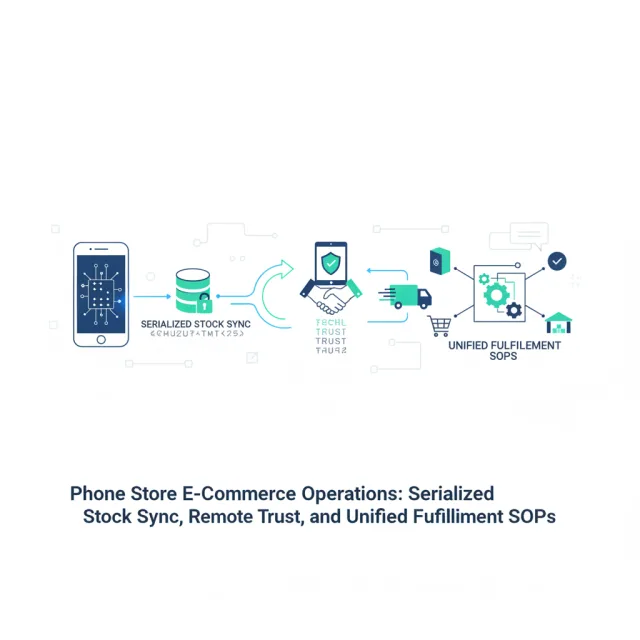
Mobile phones are not commodity goods sold purely by SKU; they are serialized assets identified by distinct IMEI numbers. Managing separate inventory piles—one set aside for web orders and another behind the counter—ties up working capital and restricts retail cash flow. The only scalable answer is a unified inventory database that bridges physical checkout counters and your digital catalog in real time.
The Golden Rule of Serialized Retail: An item is never truly "in stock" online unless the central inventory database can verify its specific IMEI status and instantly reserve that identifier the second a digital or physical cart checkout begins.
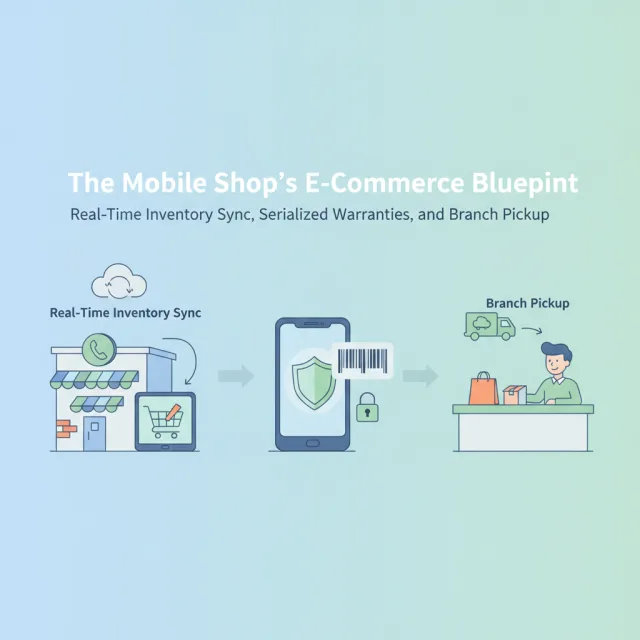
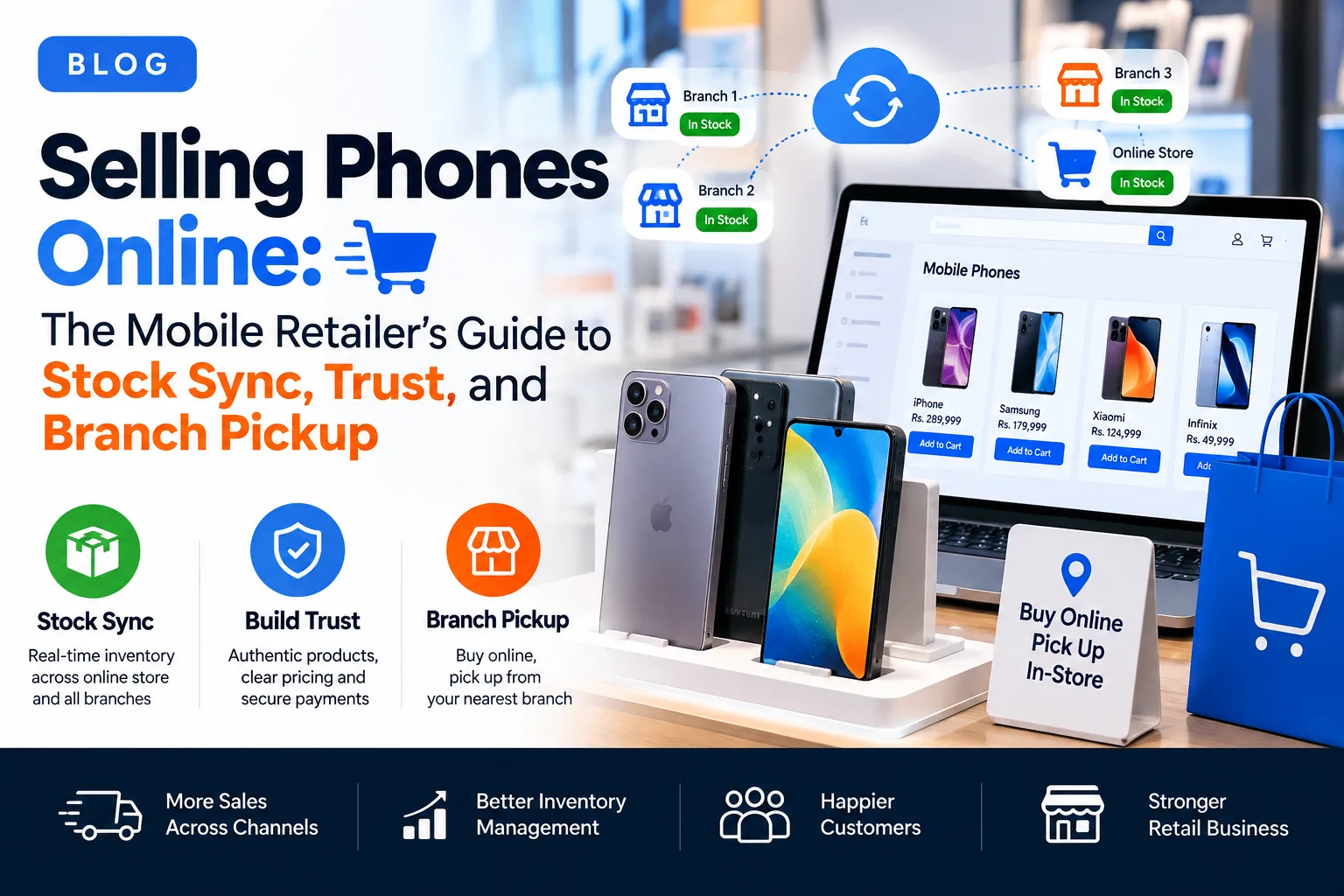
When an in-store transaction is finalized at the POS, the item's barcode or IMEI scan must immediately decrement the web inventory count. Conversely, the moment an online checkout clears, the corresponding unit must be marked as reserved on the shop floor dashboard, alerting staff to pull it from the display cabinet before a walk-in shopper attempts to purchase it.
Fulfillment Architecture: Branch Pickup vs. Courier Delivery
Consumer electronics fulfillment demands speed and loss prevention. High parcel theft rates and shipping courier delays have driven shoppers toward hybrid fulfillment models. Industry research highlights that Buy Online, Pick Up In Store (BOPIS) has become an essential retail strategy, providing buyers with instant access to their gear while dodging shipping fees.
The Power of Branch Pickup (Click and Collect)
For independent retailers with one or more physical locations, in-store pickup is your strongest competitive advantage against massive, faceless online marketplaces. Consider the operational upsides:
- Eliminated Shipping Costs and Transit Losses: Neither you nor the buyer pays courier fees, and you eliminate the risk of packages going missing or sustaining transit damage.
- Zero-Delay Verification: Customers can unbox and verify their device right at your counter, settling any cosmetic or setup questions instantly.
- High Accessory Attach Rates: When a customer visits your store to collect their online device order, your staff has a direct opportunity to demonstrate cases, fast chargers, power banks, and apply screen protectors before the customer leaves the counter.
Managing Secure Courier Delivery
For orders fulfilled via delivery, security protocols must be non-negotiable. High-value electronics parcels are prime targets for porch theft and fraudulent "item missing" claims. Standardize these delivery practices:
- Scan at Packaging: Record the outgoing IMEI 1 and IMEI 2 directly on the dispatch invoice and match them to the package tracking number.
- Tamper-Evident Packaging: Use branded or serialized security tape on packaging boxes so unauthorized opening attempts are immediately visible upon delivery.
- Mandatory Signature on Delivery: Never waive delivery signatures for serialized devices, regardless of customer requests. Require courier identity confirmation upon handover.
Customer Portals: IMEI-Based Order and Warranty Self-Service
Post-purchase inquiries represent a significant drain on front-desk time. Answering repeated phone calls asking "Where is my package?" or "Is my phone still under warranty?" pulls staff away from attending to walk-in foot traffic.
Modern mobile e-commerce resolves this by establishing an integrated customer portal. By tying order history and customer profiles directly to device identifiers, buyers can log in and view their exact dispatch stages. More importantly, self-service tracking allows customers to enter their IMEI to look up remaining warranty duration, view original digital purchase receipts, and submit repair requests without needing to visit the store or wait on hold.
Checklist: Auditing Your Phone Shop's Omnichannel Readiness
- Centralized Database: Does your inventory update instantly across POS counters and your website whenever an IMEI or barcode is scanned?
- Clear Device Condition Grading: Are cosmetic grades, battery parameters, and network lock states unambiguously documented on every pre-owned listing?
- Multi-Channel Payment Options: Can customers choose between online card processing, manual bank transfer, and cash on collection or delivery?
- Pickup Routing: If you operate multiple branches, can customers select a specific store location based on real-time stock availability at that branch?
- Serialized Packing Workflows: Are IMEI numbers printed directly onto delivery invoices and packaging manifests before shipments leave the store?
- Warranty Lookup: Do customers have a digital account page to verify warranty coverage and past purchase invoices using their device IMEI?
Unifying Your Storefront and Web Sales with iFoxPro
Juggling standalone website builders alongside disconnected retail cash registers inevitably causes inventory discrepancies, lost time, and frustrated buyers. iFoxPro solves this fragmentation with cloud management software purpose-built specifically for mobile phone shops, repair centers, and multi-branch retail operators globally.
Every iFoxPro plan includes a dedicated, ready-made e-commerce website hosted on your shop's own custom domain. Because the online storefront connects directly to the core POS system, inventory updates seamlessly in real time—tracking IMEI 1 and IMEI 2 alongside barcode-driven accessory counts. If a phone is sold at your front counter, it disappears from your digital store automatically, preventing overselling.
iFoxPro's online storefront supports flexible payment options—including checkout carts, online payment gateways, bank transfers, and cash on delivery—while providing buyers with convenient branch pickup or courier delivery choices. Furthermore, customer accounts feature self-service order tracking, repair updates, and warranty lookups keyed directly to their device's IMEI. Backed by a secure 3-layer cloud infrastructure with a 99.9% uptime target, AES-256 encrypted backups, and full GDPR compliance, iFoxPro allows independent phone retailers to offer an enterprise-grade omnichannel buying experience starting from $29 per month.
Taking the First Step Toward Omnichannel Success
Running a successful phone shop in an increasingly digital marketplace does not mean abandoning your physical location. It means turning your physical premises into an asset that reinforces your online presence. By synchronizing your POS with a transparent, serialized e-commerce catalog, backing device sales with visible warranty terms, and giving buyers the choice between secure delivery and instant branch pickup, you create a seamless shopping experience that builds long-term customer loyalty.
===CONTENT===