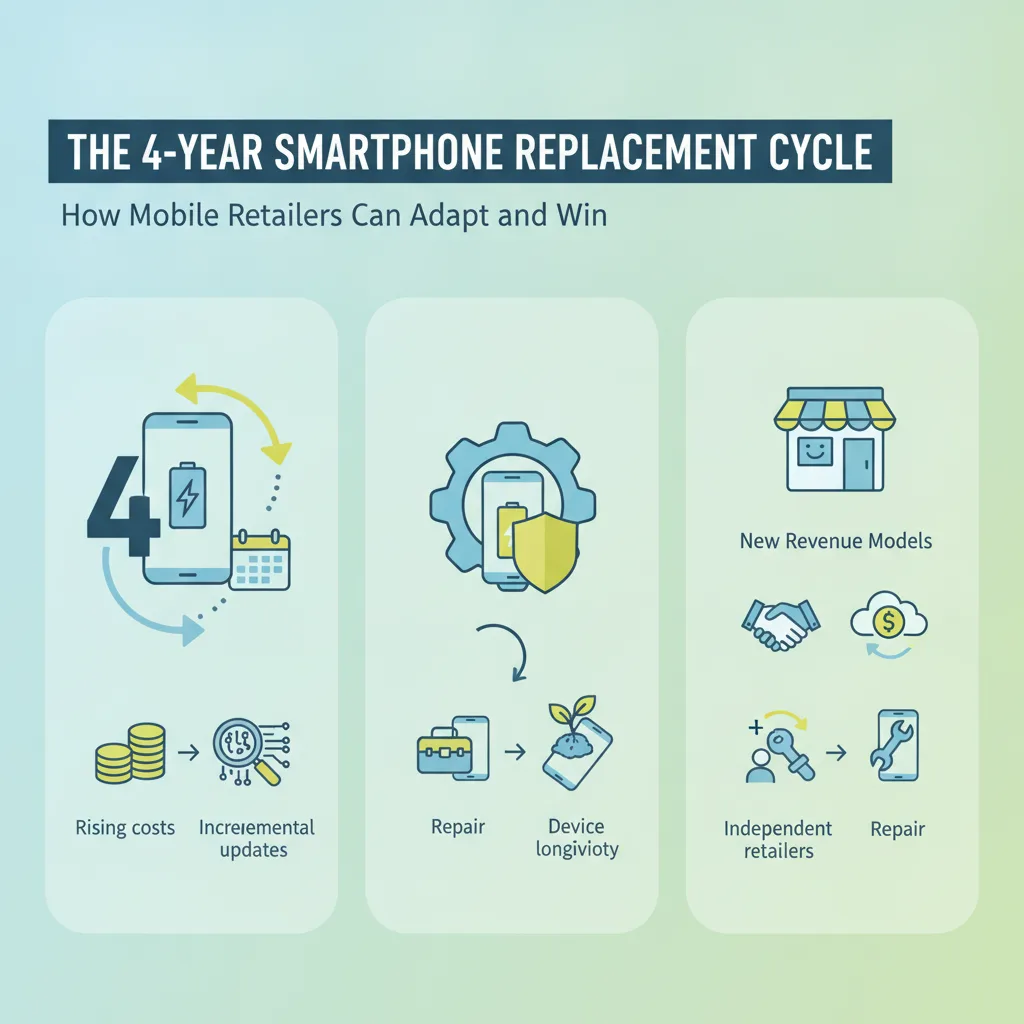
The era when shoppers queued outside mobile shops every 18 to 24 months for an incremental flagship upgrade has decisively drawn to a close. According to recent data from Counterpoint Research, the global smartphone replacement cycle has extended toward four years (43 to 48 months), driven by escalating component costs—particularly in memory and processing silicon—and diminishing year-over-year leaps in consumer-facing features. Coupled with IDC reports highlighting how macroeconomic pressure and higher average selling prices (ASPs) are splitting the market between resilient premium devices and contracting entry-level volumes, consumer behavior has shifted from impulsive replacement to prolonged maintenance.
For independent mobile shop owners, multi-branch operators, and repair centers, this prolonged lifecycle presents a critical fork in the road. Retailers who rely purely on "box moving"—selling sealed new devices with razor-thin retail margins—are feeling the squeeze of depressed footfall. Conversely, operators who understand the mechanics of the 4-year lifecycle are unlocking higher gross margins in hardware maintenance, post-warranty services, and personalized lifecycle support.
The Anatomy of the 4-Year Device Lifecycle
When consumers hold onto smartphones for 36 to 48 months, the wear-and-tear trajectory of the device becomes predictable. A smartphone does not age gracefully without intervention, and each phase of ownership creates distinct service opportunities:
- Months 0–12 (The Honeymoon Phase): High demand for premium protective accessories, including tempered screen protectors, camera lens caps, fast GaN chargers, and protective cases. Hardware failure rates remain low and are largely covered under manufacturer warranties.
- Months 13–24 (The Wear Onset): Accidental damage accumulates. Cracked outer glass, loosened USB-C ports, and worn buttons become frequent complaints. Users weigh the cost of repair against purchasing a replacement and routinely choose repair when quoted transparent pricing.
- Months 24–36 (The Battery Cliff): Modern lithium-ion smartphone batteries are typically engineered to retain roughly 80% of their original capacity after 800 full charge cycles. For active users, this threshold arrives right around the two-year mark. Device sluggishness, unexpected shutdowns, and rapid battery drain peak during this window.
- Months 36–48+ (The Secondary Transition): Software support limits, cosmetic degradation, and secondary hand-me-downs emerge. Consumers either seek out-of-warranty refurbishment to pass the handset to a family member or look to trade it in to subsidize a long-overdue upgrade.
Regulatory frameworks are accelerating this transition. Under the European Union ecodesign and energy labelling regulations, manufacturers selling devices in the EU must supply critical spare parts for at least seven years after a model exits the market and ensure batteries survive at least 800 cycles above 80% health. With right-to-repair frameworks gaining ground worldwide, consumers increasingly expect independent workshops to service their aging devices rather than forcing them into premature upgrades.
Where the Profit Pools Are Moving
Selling brand-new smartphones, especially entry-level models, has become more difficult as supply chain cost pressures drive retail prices up without a proportional jump in merchant commissions. Independent retailers cannot survive on standard hardware turnover alone. The high-margin opportunities are shifting directly into post-sale support and device longevity:
1. Battery Revitalization as a Standalone Revenue Stream
Battery replacement was once treated as an incidental repair task, but it has become the single most reliable entry point for recurring store visits. When an existing phone slows down or discharges by mid-afternoon, offering a certified, quick-turnaround battery overhaul gives the customer a "like-new" experience for a fraction of the cost of a new handset. Because component costs for replacement cells are manageable, gross margins on battery labor routinely surpass 50% to 65%.
2. Tiered Protection Packages and High-End Accessories
Because buyers understand they will keep their devices longer, they are more willing to invest in premium accessories upfront. Cheap unbranded cases and low-grade charging cables are losing shelf space to durable, drop-certified cases, multi-device charging hubs, and anti-reflective tempered glass. Bundling screen protection with a discounted first-repair voucher builds upfront revenue while locking in customer loyalty.
3. Data Migration and Device Tune-Ups
As operating systems expand in complexity, devices approaching year three often suffer from storage bloat, corrupt system caches, and sync errors. Non-hardware services—such as professional data cleanup, cross-platform OS transfers, cloud backup configuration, and physical port cleaning—carry zero material cost and represent pure margin for your technicians.
Actionable Steps: Adapting Your Shop to the 4-Year Cycle
To align your mobile store with longer replacement intervals, implement the following operational playbook:
- Establish a Standard Battery Health Check at the Counter: Train sales staff to offer a free 30-second battery diagnostics check whenever a customer buys an accessory or asks about new models. If maximum capacity falls below 82%, pitch a same-day battery refresh.
- Structure "Mid-Life" Service Job Cards: Create a packaged maintenance product for phones between 18 and 30 months old. Combine a fresh battery, internal speaker and port de-dusting, and a new screen protector into a flat-rate package.
- Implement Serialized Intake and Service History: Never treat a returning customer as a stranger. Record every intake against the device's dual IMEI numbers so technicians can review previous repairs, verify warranty validity on replaced components, and avoid liability for pre-existing defects.
- Curate Accessory Inventory by Device Longevity: Discontinue stocking large volumes of low-margin generic accessories for models with short lifespans. Instead, maintain dynamic reorder points for reliable charging cables, fast-charging wall adapters, and high-durability cases that match active devices in your local trade area.
- Publish Upfront Repair Estimates Online: Consumers who delay new purchases do substantial online research before repairing an older phone. Providing an online tracking portal or repair catalog on your store website builds immediate trust over competitors who hide pricing behind phone calls.
"When replacement cycles stretch past 40 months, the shop that wins is not the one with the flashiest new displays—it is the shop that manages the ongoing lifecycle of the device already in the customer's pocket."
How Modern Store Infrastructure Anchors Device Longevity
Navigating a service-heavy retail model requires tight operational control that generic cash registers cannot handle. When your revenue relies on servicing devices across several years, every transaction must link back to specific hardware identifiers and parts inventory.
This is where specialized platforms like iFoxPro support modern store operators. Built specifically for mobile retail and repair environments, iFoxPro provides dual-IMEI tracking (capturing IMEI 1 and IMEI 2) to maintain a complete history for every handset from purchase and sale through subsequent service visits. Its integrated repair and service center module allows shops to generate detailed job cards, assign repairs to individual technicians, and track spare parts consumption in real time so stock counts stay accurate.
Furthermore, because today's consumers demand frictionless updates, iFoxPro plans include a dedicated e-commerce store with live stock synchronization from the POS. Customers can check repair progress and warranty terms directly by IMEI through their online customer accounts, while retail operators monitor performance, approve transfers, and track technician throughput using iFoxPro's mobile app for iOS and Android.
Conclusion
The 4-year smartphone upgrade cycle is not a temporary market dip; it represents a permanent maturing of consumer electronics retail. While overall unit shipments of brand-new devices may remain constrained by rising component prices and extended user retention, consumer demand for dependable mobile technology has never been higher.
By transforming your store from a simple sales outlet into a comprehensive lifecycle center—specializing in high-yield repairs, preventative battery maintenance, premium accessories, and systematic IMEI-level customer records—you can turn slower upgrade cycles into your business's most profitable operational advantage.